
Tag Archives: mosquito

Why do mosquitoes choose us? Lindy McBride is on the case

Few animals specialize as thoroughly as the mosquitoes that carry diseases like Zika, malaria and dengue fever.

In fact, of the more than 3,000 mosquito species in the world, most are opportunistic, said Carolyn “Lindy” McBride, an assistant professor of ecology and evolutionary biology and the Princeton Neuroscience Institute. They may be mammal biters, or bird biters, with a mild preference for various species within those categories, but most mosquitoes are neither totally indiscriminate nor species-specific. But she is most interested in the mosquitoes that scientists call “disease vectors” — carriers of diseases that plague humans — some of which have evolved to bite humans almost exclusively. (more…)
Read More

Looking to mosquitoes for a way to develop painless microneedles

Research finds four keys to piercing skin without hurting

A mosquito can insert a needle-like probe into your skin and draw blood for several minutes without you even noticing.

Researchers at The Ohio State University believe we can learn from nature’s design of the mosquito to create a painless microneedle for medical purposes. (more…)

Read More

Crocodiles 168 Times More Dangerous Than Sharks

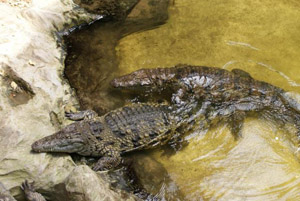
The fears connected with shark attacks are stronger in the world today than those related to much more dangerous predators – crocodiles. However, crocodiles pose a greater threat to humans than sharks do.

A crocodile snatched Hendrik Coetzee, a South African guide, 35, from his kayak while he led an American expedition into the heart of Congo last week. Two American tourists could only watch the scene in horror as the guide was killed and eaten by the predator. They paddled to safety unharmed. Coetzee’s body has not been recovered.

Stories about croc attacks are just as terrible as they are hopeless. Experts say that it is possible to stay to fight off a shark, but it is much more difficult or even impossible to rescue themselves from an attacking croc. (more…)

Read More