PASADENA, Calif. — NASA research indicates hunks of frozen carbon dioxide — dry ice — may glide down some Martian sand dunes on cushions of gas similar to miniature hovercraft, plowing furrows as they go.
Researchers deduced this process could explain one enigmatic class of gullies seen on Martian sand dunes by examining images from NASA’s Mars Reconnaissance Orbiter (MRO) and performing experiments on sand dunes in Utah and California. (more…)
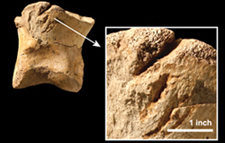
T. rex was the only big carnivore in western North America 65 million years ago that was capable of making such large gouges. Image credit: Nicholas Longrich
It turns out that the undisputed king of the dinosaurs, Tyrannosaurus rex, didn’t just eat other dinosaurs but also each other. Paleontologists from the United States and Canada have found bite marks on the giants’ bones that were made by other T. rex, according to a new study published online Oct. 15 in the journal PLoS ONE.
While searching through dinosaur fossil collections for another study on dinosaur boneswith mammal tooth marks, Yale researcher Nick Longrichdiscovered a bone with especially large gouges in them. Given the age and location of the fossil, the marks had to be made by T. rex, Longrich said. “They’re the kind of marks that any big carnivore could have made, but T. rex was the only big carnivore in western North America 65 million years ago.” (more…)