
Political maturity in Bangladesh remains a work in progress, says AB Party General Secretary Barrister Asaduzzaman Fuaad. In an interview with us, he explains what political maturity means, why internal party democracy matters, and why politicians should focus on state-building rather than treating opponents as enemies.
Question: Is there such a thing as the political maturity of a nation or society? If so, how would you define it? Are there any benchmarks to measure it?
Fuaad: Absolutely. Political maturity is a set of habits and democratic practices that politicians and political parties develop over many years. It doesn’t emerge overnight. It evolves through regular political engagement and institutional practice.
Take many Western democracies, for example. Party leaders cannot simply expect to become candidates without the support of party members or grassroots voters, nor can nominations depend solely on the party chief. Another sign of maturity is how politicians discuss national issues. Their debates are generally centred on policies and substance, whereas our politics often lacks clear policy positions.
Transparency in political financing is another important indicator. So is the way parties manage internal disagreements. A politically mature party tolerates dissent, encourages debate and resolves differences through established democratic processes.
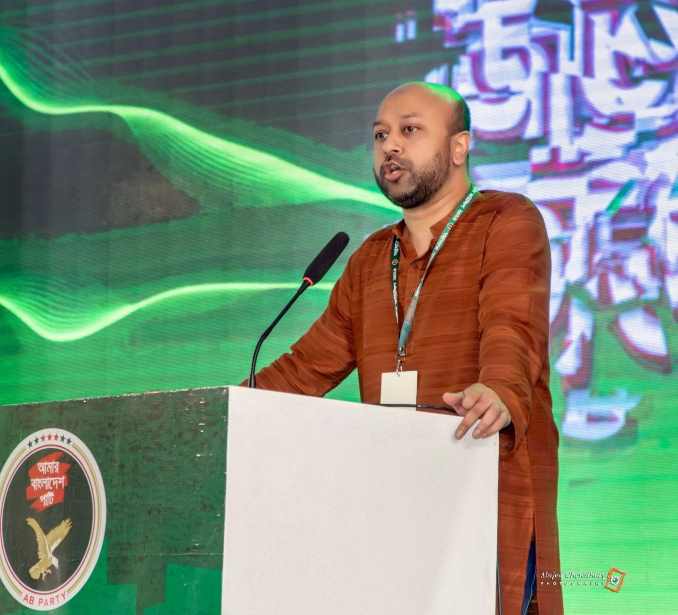
Barrister Asaduzzaman Fuaad: Political maturity is a set of habits and democratic practices that politicians and political parties develop over many years. Photo credit: Kayes Sohel
Question: What about nations or societies with more compromising attitudes to their rivals, are they more mature politically?
Fuaad: Yes. That mindset develops over years of democratic practice until it becomes part of the political culture. In mature democracies, politicians from different parties see each other as competitors, not enemies. Their politics revolves around building the state and serving the nation. Sadly, we, and by default other third world countries, are far away from that reality.
Question: Can a politically popular leader become a threat to more politically mature leaders, either within the same party or in rival parties?
Fuaad: On a personal level, it may be and it is so everywhere across the world. Politicians are human beings and not free from envy and jealousy. Issue is how political parties and senior leaders deal with it within their party machinery according to the party constitution and working protocols. When democracy is widely practiced within the political establishment, it becomes easier for the popular leaders to navigate which can benefit both party and country.
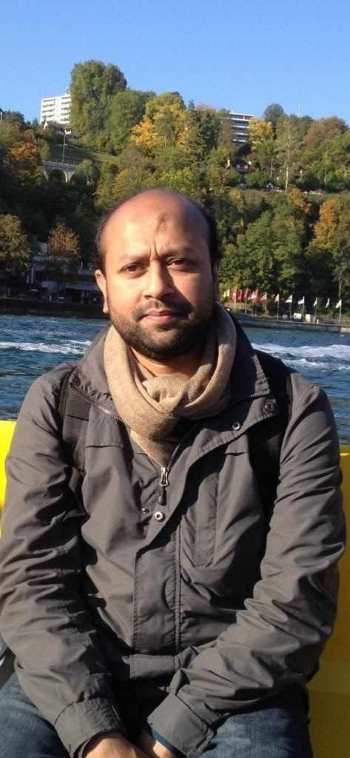
Barrister Fuaad: Transparency in political financing is another important indicator of political maturity. Photo credit: Kayes Sohel
Question: If political leaders in a society are considered politically mature, can then the general people expect that their leaders will never cross the ethical boundaries of their society or culture?
Fuaad: In any given society, political representatives and leaders should serve as role models in terms of vision, strategic capacity, wisdom, honesty and above all, integrity.
Also, the political parties and state institutions should be strong enough to have a kind of check and balance in place to deal with situations if people’s representatives are detailed and become morally bankrupt. A culture of perception usually exists in mature democracies, what to do when an acceptable ethical boundary is crossed; as well as constitutional provision of impeachment to hold the head of the state accountable, if and when necessary. Most importantly, if politicians commit offences, they must be brought to justice like any other citizens – no culture of impunity should exist for politicians and public office bearers.
Question: If a nation’s leaders are politically mature, will they encourage active participation of their citizens in the country’s political agendas?
Fuaad: Yes. It’s a reciprocal reality. If the citizens do not actively take part in public affairs and continuously hold the politicians accountable, politics and politicians would not be mature to serve the people and nation. Therefore, it’s a both way job.
Question: Let’s set a scale of 1 to 10, where 10 represents the highest level of political maturity in a society/nation, then where will Bangladesh stand today? Which nation in the globe do you think deserve to get 10?
Fuaad: It would be quite difficult to number the country’s political maturity while being in the third world category. But certainly we stand around the middle, above the worst possible scenarios. Every country has its own cultural and historical reality which influences political maturity, it also fluctuates across generations. Surely, western countries would score better now but they collectively colonised the world for centuries and stole our wealth on a biblical scale. Their systematic loot and plunder are still going on through an institutionalised capitalist system. Therefore, not everything is our own fault to do so badly in the race of political maturity.
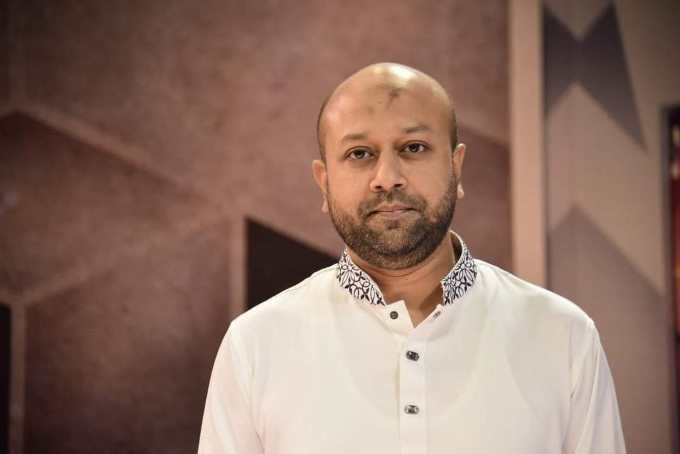
Barrister Fuaad: In mature democracies, politicians from different parties see each other as competitors, not enemies. Photo credit: Kayes Sohel
Question: Can you scale other countries in our neighbourhood, like India, Pakistan, Nepal, Sri Lanka, Bhutan, Maldives, Myanmar and Thailand?
Fuaad: It’s pretty similar in our South Asian neighbourhood due to broadly similar historical and European colonial experiences.
India perhaps, on relative terms, would do better due to their democratic practices for eight decades without much interruption. . However, in my view, that democratic culture has deteriorated significantly under the Modi-BJP-RSS administration.
*Asaduzzaman Fuaad, a UK trained barrister-at-law and General Secretary of AB (Amar Bangladesh) Party, was speaking to Shamskm.com on political culture, maturity and crisis in the context of Bangladesh and South Asian neighbourhood.
The interview is conducted by Dhaka based freelance journalist Kayes Sohel.